+91 85238 33348
 kumarpre@hotmail.com
What Is Angioplasty?
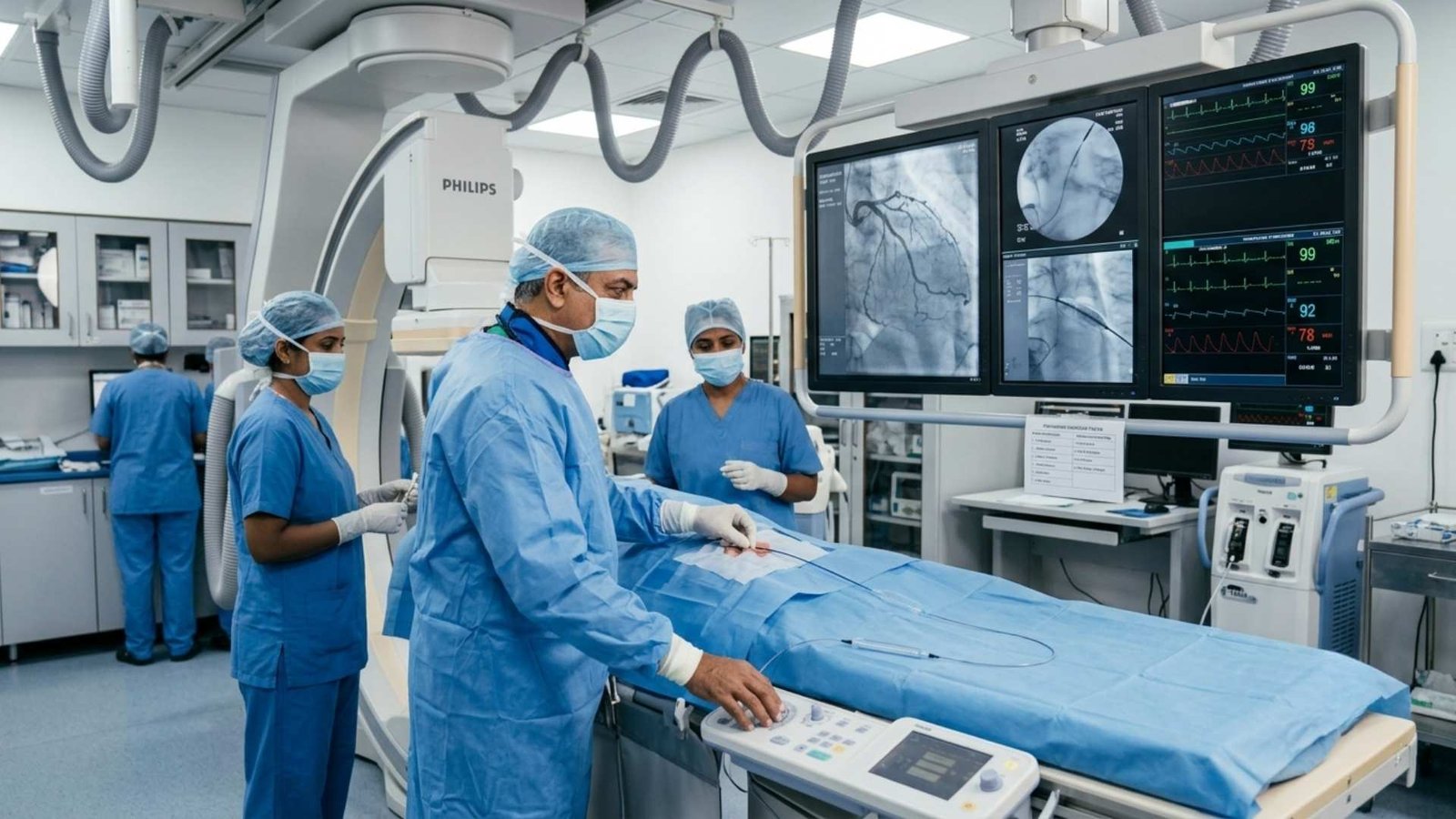
Angioplasty is a minimally invasive procedure used to open narrowed or blocked coronary arteries. A small balloon is inserted through a catheter to widen the artery, and in many cases, a stent is placed to keep the artery open. This improves blood flow and reduces the risk of heart attacks.
When Do Doctors Recommend Angioplasty?
Doctors usually recommend angioplasty for patients experiencing chest pain caused by blocked arteries, after a heart attack, or when medications alone cannot control symptoms. Diagnostic tests such as coronary angiography help determine whether the procedure is necessary.
Benefits of Angioplasty
Compared to open-heart surgery, angioplasty generally involves smaller incisions, shorter hospital stays, quicker recovery, and less discomfort. Most patients return to their daily routine within a few days while experiencing improved blood circulation and symptom relief.
Recovery and Aftercare
Following angioplasty, patients should take prescribed medications, attend follow-up appointments, eat a heart-healthy diet, stay physically active, and avoid smoking. These steps help maintain the success of the procedure and reduce the chances of future blockages.
Conclusion
Angioplasty is an effective treatment for restoring blood flow to the heart. Combined with healthy lifestyle changes and regular medical care, it helps patients lead healthier and more active lives.