 +91 85238 33348
 kumarpre@hotmail.com
Life After Angioplasty and Stenting: Medicines, Recovery and Protecting Your Stent
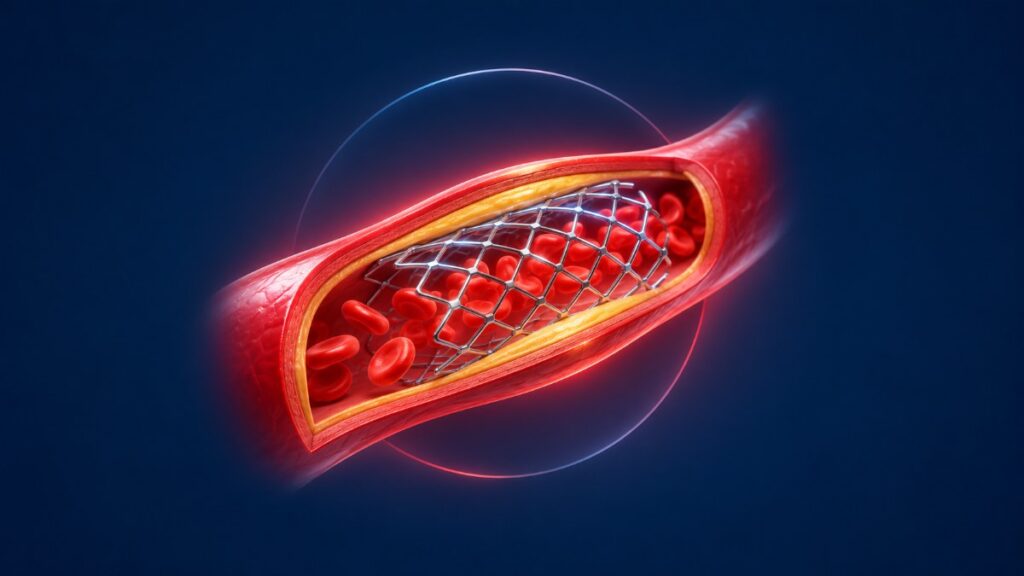
An angioplasty with a stent can relieve chest pain within minutes and, during a heart attack, can be life-saving. But the stent is only the beginning. How you recover, which medicines you take and how you live afterwards decide how well your heart does over the next ten or twenty years.
- A stent props open one blocked segment. It does not cure the disease in the rest of your arteries.
- Most people go home in 1 to 2 days and return to light work within about a week after a planned procedure.
- Blood thinners are essential. Never stop them without asking your cardiologist.
- Cardiac rehabilitation, diet, exercise and quitting tobacco protect both the stent and the rest of the heart.
What a stent does, and what it does not do
A stent is a tiny metal mesh tube, usually coated with medicine, that holds a narrowed artery open. It treats the blockage that was causing trouble. The same process (atherosclerosis) is usually present elsewhere in the heart’s arteries, so long-term protection depends on medicines and lifestyle, not on the stent alone.
Your recovery timeline
| When | What to expect |
|---|---|
| First 24 to 48 hours | Rest. Watch the wrist or groin puncture site for swelling or bleeding. Drink plenty of water unless told otherwise. |
| First week | Gentle walking at home. Avoid lifting more than 4 to 5 kg with the procedure arm. Most people can shower normally. |
| Week 1 to 4 | Gradually increase walking. Many return to desk work after about a week. Driving is usually allowed after about a week for a planned procedure, longer after a heart attack. |
| After 1 month | Join cardiac rehabilitation if advised, steadily build up exercise and attend your follow-up visit. |
Recovery after a heart attack is usually slower than after a planned angioplasty. Your cardiologist will guide you on your own timeline.
The medicines that protect your stent
| Medicine | Why it matters |
|---|---|
| Aspirin | Prevents clots on the stent. Usually continued lifelong. |
| Second blood thinner (clopidogrel, ticagrelor or prasugrel) | Taken together with aspirin, usually for 6 to 12 months, while the stent heals into the artery wall. |
| Statin (for example atorvastatin or rosuvastatin) | Lowers LDL cholesterol and stabilises plaque in all arteries. Usually lifelong. |
| Beta-blocker, ACE inhibitor or ARB | Protect the heart muscle and control blood pressure, especially after a heart attack. |
If a dentist, surgeon or another doctor asks you to stop a blood thinner, speak to your cardiologist first. Most minor procedures can be done safely while continuing them.
Warning signs after angioplasty
- Chest pain or pressure similar to what you had before: call 108 immediately.
- Bleeding, rapidly growing swelling or severe pain at the wrist or groin puncture site: press firmly and seek help.
- Coldness, numbness or colour change in the hand or leg used for the procedure.
- Black stools, blood in urine or vomit, or unusual bruising: contact your doctor, as this may be bleeding from blood thinners.
- Fever, breathlessness or fainting.
Exercise and cardiac rehabilitation
Walking is the best start. Begin with 10 to 15 minutes a day and build up to about 30 to 45 minutes on most days. A supervised cardiac rehabilitation programme improves fitness, confidence and long-term survival. Avoid heavy weight lifting and sudden intense exertion until your cardiologist clears you.
Eating for your heart, the Indian way
- Cut down on deep-fried snacks, vanaspati, excess ghee and butter.
- Reduce salt, pickles, papad and packaged namkeen.
- Choose whole grains, millets, dal, sprouts, vegetables, fruits and a handful of nuts.
- Prefer grilled, steamed or tandoori cooking over frying.
- Limit sweets, sugary drinks and refined flour (maida).
Numbers to aim for
| Measure | Common target after a stent* |
|---|---|
| LDL cholesterol | Below 55 mg/dL |
| Blood pressure | Below 130/80 mmHg |
| HbA1c (if diabetic) | Around 7% or below |
| Tobacco | Zero, including chewing tobacco and passive smoke |
| Waist | Below 90 cm (men) / 80 cm (women) |
*Your cardiologist may set different targets for you.
Can the artery block again?
Modern drug-coated stents have greatly reduced re-narrowing inside the stent (restenosis). The bigger long-term risk is new blockages in other arteries. Taking medicines regularly and controlling risk factors is what prevents a second event.
The bottom line
Think of your stent as a second chance. Take every medicine as prescribed, keep your follow-up visits, move every day, eat sensibly and stay tobacco-free.
Frequently asked questions
Is it safe to have an MRI with a stent?
Yes. Modern coronary stents are MRI-safe. Simply tell the MRI team you have a stent.
Will a stent set off airport metal detectors?
No. Coronary stents are too small to trigger them.
Can I travel or fly after angioplasty?
Most people can fly within a few days after a planned procedure. Carry your medicines and discharge summary. After a heart attack, check with your cardiologist first.
When can I resume sexual activity?
Usually after about a week if you can climb two flights of stairs comfortably and have no chest pain. Ask your doctor before using medicines for erectile dysfunction.
Can I drink alcohol?
It is best avoided or kept to a minimum. Alcohol can raise blood pressure and interact with medicines.
Will I need another angioplasty?
Many people never do. Your risk depends mainly on how well cholesterol, blood pressure, diabetes and tobacco are controlled.

This article is for general patient education and is not a substitute for a consultation. Treatment decisions depend on your individual reports, anatomy and overall health, and should be made with your cardiologist.